Cloud vs On-Site Battery Analytics for Energy Storage Systems


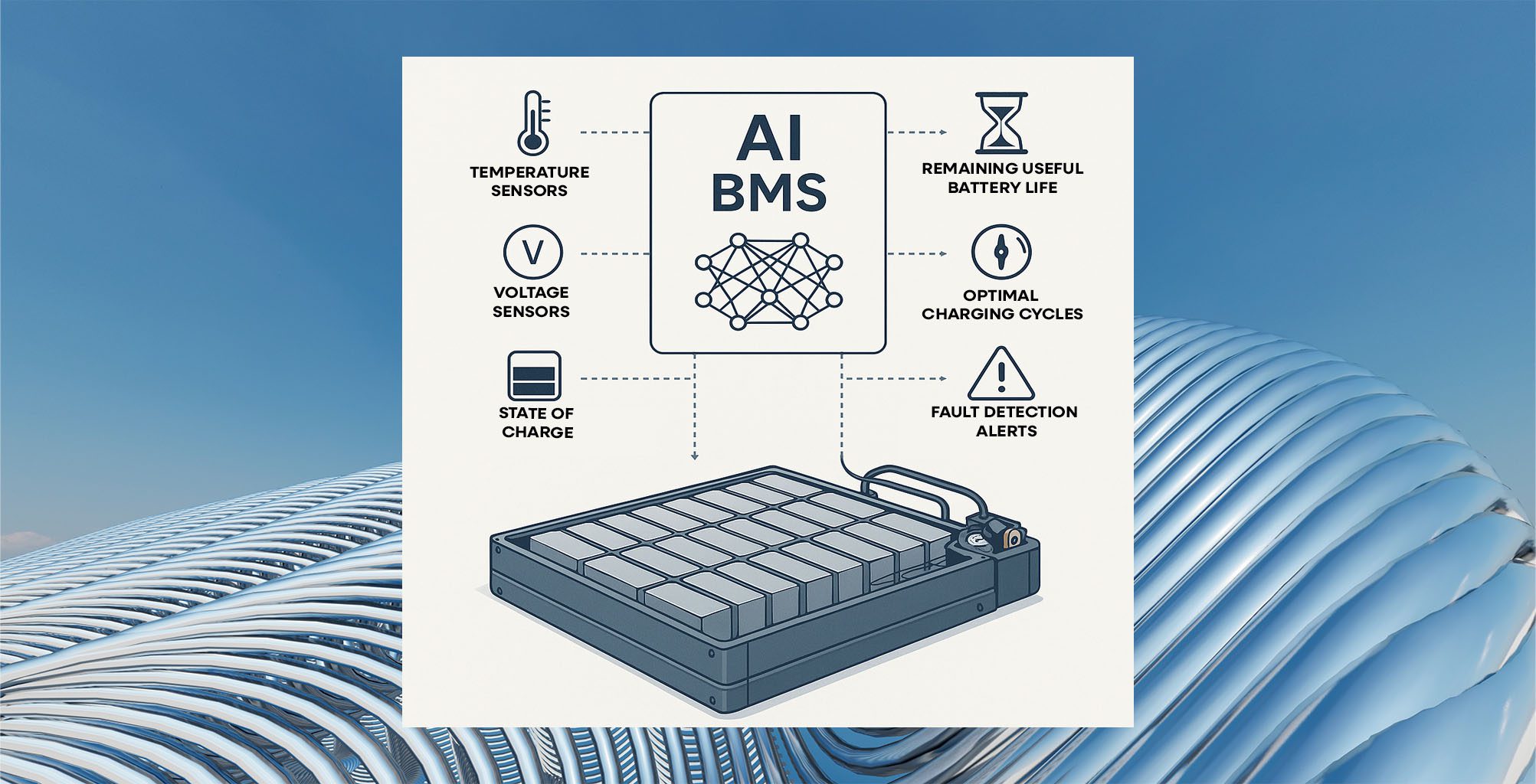
Battery analytics has evolved from a “nice-to-have” monitoring tool into the primary intelligence layer that defines a BESS asset’s economic viability. In an era of high-frequency market participation, simply “operating” is no longer enough; success depends on informed control. While traditional Battery Management Systems (BMS) are engineered for safety-critical operation, their inherent conservatism creates an “uncertainty tax” with wide safety buffers that lock away usable capacity and mask the battery’s true physical limits. To reclaim this value, operators are moving beyond passive data visualisation and toward high-fidelity state estimation that reconciles rigorous safety protocols with maximum revenue generation.
But when teams start evaluating battery analytics software for an energy storage system, a common question is:
Should battery analytics run in the cloud or on-site (edge / local / “no-cloud”)?
There’s a common misconception that “battery analytics needs to be done through the cloud”. In reality, the best answer depends on your operational priorities, site constraints, compliance requirements, and how you plan to turn insights into actions.
In this guide, we’ll break down cloud vs on-site battery analytics for energy storage systems using the criteria that actually matter in day-to-day operations: data trust, latency, resilience, security, scalability, cost, and bankability.
Why Battery Analytics Matters for Energy Storage Systems
For energy storage operators, battery analytics is not a dashboard for dashboard’s sake. It’s how you move from raw telemetry to operational clarity:
- Real-time monitoring you can rely on (not just “data”, but trusted data)
- Health and degradation understanding that supports maintenance planning and availability targets
- Performance and value extraction: round-trip efficiency, recoverable energy, cost per cycle, state of energy / available energy
- Bankability: proving your asset is being monitored and managed in a way that reduces risk and increases confidence
And increasingly, analytics isn’t the endpoint. The direction of travel is “insights → actions”: using optimisation outputs to drive operational decisions (recommendations, maintenance planning, dispatch confidence, etc.).
Cloud vs on-site: the real decision is “what do you need the system to do?”
A helpful way to frame this is:
- Cloud tends to be strong for centralised scale, cross-fleet benchmarking, and easier roll-out across many sites.
- On-site / edge tends to be strong for data sovereignty, low-latency reliability, and sites where connectivity or security is a hard constraint.
In many procurement processes, ‘no-cloud’ or strict data-sovereignty requirements can become decisive, especially for critical infrastructure, regulated environments, or organisations with strict governance policies.
So instead of treating this as a one-size-fits-all choice, treat it as engineering and risk management.
The comparison that matters: 8 practical criteria
1) Data sovereignty and governance
If you operate in environments where data sovereignty is non-negotiable (critical infrastructure, strict internal policies, regulated environments, or sensitive commercial strategies), on-site approaches can reduce exposure by keeping more processing local.
Consider where the data is processed and stored, who has access to it and how that access is audited, and what the operating policy is if a site needs to run disconnected for a period.
2) Trust and accuracy of monitoring data
A common operational concern is whether battery monitoring data can be trusted, because decisions on dispatch, maintenance, and risk depend on accurate, complete, and timely signals.
Cloud vs on-site isn’t automatically the trust issue, validation and robustness are. But architecture can amplify problems:
- If connectivity is patchy, cloud-first systems can create gaps, delayed signals, or “delays or gaps in data continuity”.
- On-site processing can maintain continuity and allow local integrity checks before data is forwarded or aggregated.
Consider what happens during data loss or time drift, how the platform distinguishes unreliable data from genuine site behaviour, and whether the architecture helps preserve continuity and integrity when connectivity is poor.
3) Latency and real-time operational response
Real-time monitoring is often a core requirement for operators, particularly where early fault detection, safety response, or performance optimisation depends on fast, reliable signals.
If your use case includes fast detection of anomalies, thermal event indicators, or operational constraints where minutes matter, local processing can be a practical advantage.
Cloud can still be “sufficiently low-latency” for many scenarios, but you should define “real-time” in operational terms, not marketing terms.
Consider the end-to-end latency from measurement to alert to action, how “real-time” is defined in practical operational terms, and what the expected system behaviour is if a site goes offline.
4) Resilience and uptime
Uptime, reliability, and operational performance are central concerns for energy storage operators, because monitoring gaps or delayed insights can quickly translate into downtime or avoidable risk.
Cloud architectures can be highly resilient if connectivity is reliable and the vendor’s uptime is excellent. On-site can be resilient if local hardware is robust and support processes are mature.
Consider where the single points of failure sit, whether in connectivity, gateways, or local compute, how the monitoring system itself is monitored, and what the operational playbook is when something fails.
5) Scalability across sites and teams
Cloud generally wins on speed to deploy across multiple regions and sites, especially when you want a consistent view across fleets and stakeholders.
On-site can still scale, but it usually needs stronger standardisation (hardware profiles, local maintenance, update strategy).
Consider how updates are rolled out, how much control you have over that process, and whether the platform can support a hybrid model with edge processing and central aggregation as your portfolio grows.
6) Security posture and risk appetite
Both approaches can be secure. Both can be insecure.
The difference is often where you want the security boundary to sit and how you govern access. For some buyers, “no-cloud” isn’t an anti-cloud statement, it’s a risk boundary decision.
Consider where you want the security boundary to sit, what the relevant threat model looks like, including IT/OT separation and vendor access policies, and how credentials, keys, and updates are managed.
7) Cost (and where cost hides)
Cloud can appear lower-cost initially because you avoid upfront hardware and local maintenance. But cloud costs can grow with data volume, retention needs, and fleet scale.
On-site has clearer upfront cost and predictable ongoing cost, but requires local compute and a support model.
Consider what is included in the base offering versus treated as an add-on, such as data retention, advanced models, integrations, and support, and what the cost profile is likely to look like by year three as data volumes increase.
8) Bankability: Proving Performance in Energy Storage Systems with Trusted Data
Lenders, insurers, partners, and internal stakeholders tend to care less about whether analytics is cloud or on-site, and more about whether you can demonstrate:
- consistent monitoring and reporting
- reliable performance metrics (e.g., round-trip efficiency, recoverable energy)
- proactive risk management (degradation, anomalies, thermal indicators)
If your architecture decision helps you prove those things with fewer operational gaps, it supports the bigger outcome.
When cloud is usually the best fit
Cloud tends to be the right answer when you prioritise:
- Rapid roll-out across many sites
- Cross-site benchmarking and central visibility
- Easier integrations with business systems
- Teams that want minimal local infrastructure management
Cloud also works well when your sites have strong connectivity and your governance model is comfortable with remote processing.
When on-site (edge / “no-cloud”) is usually the best fit
On-site tends to be the right answer when you prioritise:
- Data sovereignty and strict governance requirements
- Low-latency real-time monitoring and robust operation during connectivity issues
- A tighter security boundary (especially for critical infrastructure)
- Operational continuity where “monitoring gaps” are unacceptable
This is why ‘no-cloud’ can become a decisive requirement late in evaluation — when teams are comparing operational risk, governance, and resilience.
The best answer for many operators: hybrid (edge + central)
For many energy storage portfolios, the strongest pattern is:
- Edge/on-site for continuity + speed + governance, and
- Central aggregation (cloud or central systems) for fleet visibility + reporting + benchmarking.
This gives you a practical way to balance real-time operational needs with portfolio-level decision making, without forcing a one-size-fits-all architecture.
Quick decision checklist
If you want a quick evaluation checklist, start here:
- Do we require data sovereignty / no-cloud at any sites?
- How reliable is site connectivity, and what happens when it fails?
- What latency do we need for anomaly detection / operational response?
- How do we validate accuracy and trust in monitoring data?
- What metrics matter most to ROI and bankability (recoverable energy, cost per cycle, availability)?
- How do we turn insights into actions (recommendations, maintenance planning, operational decisions)?
Choosing the Right Deployment Model for Your Energy Storage Systems Portfolio
Cloud vs on-site isn’t a trend question. It’s a confidence question.
The right battery analytics approach is the one that helps you:
- Trust the data
- Reduce uncertainty in performance and available energy
- Improve uptime and value extraction
- Strengthen the case for bankability and long-term asset health
If you’re evaluating analytics approaches for your energy storage systems, start with your operational constraints and decision workflows, then work backwards into architecture.
Learn more about battery analytics for Energy Storage Systems here: https://eatron.com/energy-storage-systems
FAQs
Is cloud battery analytics always better for energy storage systems?
No. Cloud is great for scale and central visibility, but on-site can be the better fit when data sovereignty, low latency, or resilience during connectivity gaps are critical.
Can you run battery analytics without sending sensitive data to the cloud?
Yes, depending on the platform, analytics can be processed on-site/edge with only necessary outputs aggregated centrally. This is often described as “no-cloud” or “data sovereignty” capability.
What metrics should energy storage operators track to improve performance and ROI?
Common operational and value metrics include availability, degradation indicators, cost per cycle, round-trip efficiency, recoverable energy, and state of energy / available energy, especially when tied back to actions that reduce downtime and improve dispatch confidence.
Why does “trust in monitoring data” matter so much for energy storage systems?
Because operational decisions are only as good as the inputs. If data is incomplete, delayed, or unreliable, teams can misdiagnose issues, miss early warnings, or fail to prove performance outcomes to stakeholders.