Edge AI vs Embedded AI: Why the distinction is the most important one nobody in the industry is making

Every conference says edge AI. Every panel says edge AI. We should stop using ‘edge AI’ as a sufficient description for safety-critical systems.
Every conference, panel, and conversation about AI in physical systems converges on the same answer: edge AI.
It has become the default answer to the question of how we bring artificial intelligence closer to the real world. And I understand why. Running computation locally, close to the data source, rather than routing everything through a remote data centre – that is a genuine and important capability.
But I think we need to be more precise. Because when the system we are deploying into is safety-critical, when failure has physical consequences, when the AI must operate on constrained silicon in real time without any connectivity, edge AI does not tell you enough. And the gap between what edge AI typically means and what those systems actually need is larger than the industry has acknowledged.
What edge AI actually describes
Edge AI, as the industry uses the term, is primarily a deployment location. It describes where the computation happens – on a chip local to the data source rather than in a remote data centre. The model runs on a camera, a gateway, an ECU. That is the definition.
But it says nothing about how the AI was designed. It does not tell you whether the model was built for constrained silicon from the ground up, or compressed from a cloud-trained architecture as an afterthought. It does not tell you whether the AI can run recursively and iteratively across multiple variables simultaneously. It does not tell you whether the model can perform at the latency the application demands, on the compute actually available inside the hardware, under the operating conditions the system will encounter in the field.
For applications like image recognition in a camera or voice detection in a consumer device, this may not matter much. The task is relatively singular. The consequence of an error is manageable. Getting it slightly wrong means a bad user experience.
For critical systems, the constraint profile is completely different.
What critical systems actually need
Consider a battery management system in a grid-scale energy storage asset. The AI must track the electrochemical state of hundreds, sometimes thousands, of individual cells simultaneously, in real time, continuously. It must account for temperature variation, degradation history, load profile, and chemistry. It must detect the early signatures of a thermal event – a process that can develop in milliseconds – and it must do this on the compute available inside the hardware, without a network connection, without a round-trip to the cloud, without the luxury of being wrong.
This is not a single inference task. It is a recursive, iterative, multi-variable physical estimation problem running on constrained silicon where the consequence of failure is not a degraded user experience. It is a safety incident or a grid outage.
“You cannot call the cloud to decide whether a cell is entering thermal runaway. The intelligence must be embedded, validated, and always-on.”
The same is true in automotive. The software controlling a battery pack in an electric vehicle must be certifiable to ISO 26262 functional safety standards: deterministic, hardware-resident, always-on. Cloud latency is not a performance concern in this context. It is a safety disqualifier.
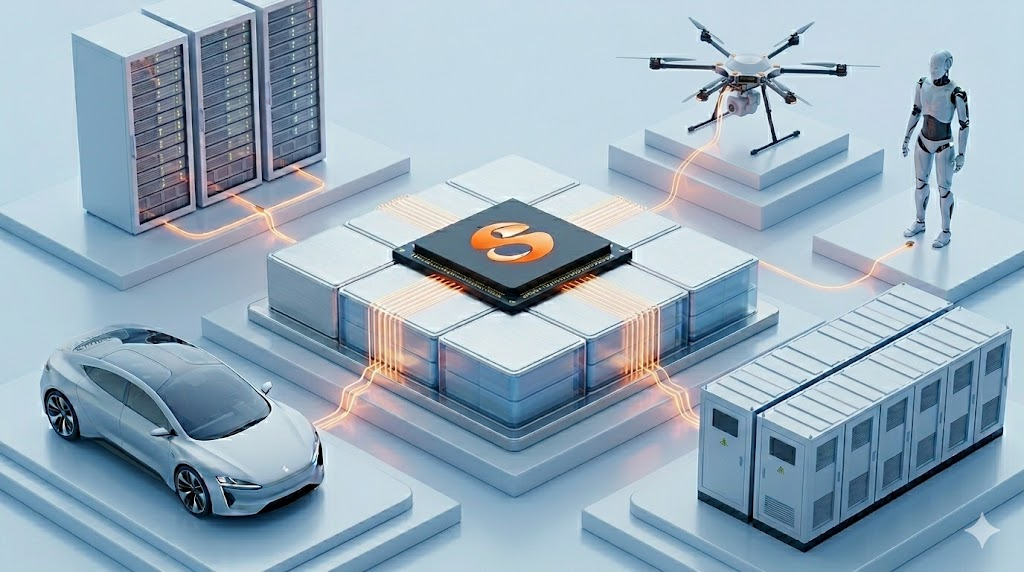
It is true in drones, where weight constraints impose minimal compute and connectivity is often absent. In industrial robotics, where field operation means no guaranteed network. In data centres, where the battery systems keeping AI infrastructure online must themselves be managed by intelligence that cannot depend on external connectivity. The irony of that last example is not lost on me: the AI data centre needs embedded AI to keep its own power reliable.
In every one of these environments, you need AI that was designed for constrained silicon. Not adapted to it after the fact.
The distinction that changes the engineering question
This is what I mean by embedded AI. Not edge AI. Embedded AI.
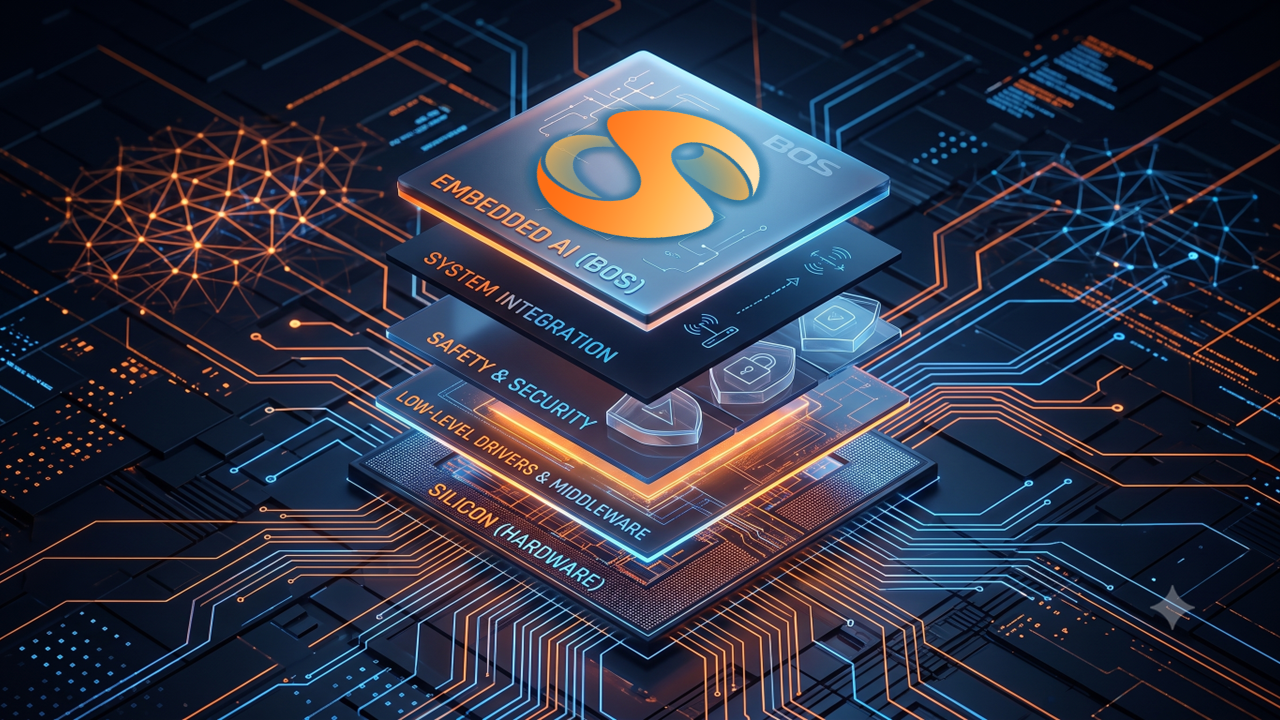
The difference is not one of location. It is one of design origin. Embedded AI is AI conceived, trained, and validated for hardware-resident execution from day one. It runs recursively and iteratively, across multiple variables, on the compute available inside real systems, operating within the physics and constraints of the deployment environment. It was not retrofitted to survive those constraints. It was built around them.
This is not a refinement of edge AI. It is a different category of AI development.
At Eatron, we have spent years working on exactly this problem. We ran an extensive internal evaluation focused specifically on recursive battery modelling workloads – not to find the fastest chip for inference, but to understand which silicon architectures can actually support recursive, iterative AI computation at the latency and reliability that critical system deployment demands. The findings were instructive. Most cannot. The gap between what edge AI chips are designed for and what embedded critical system AI requires is significant.
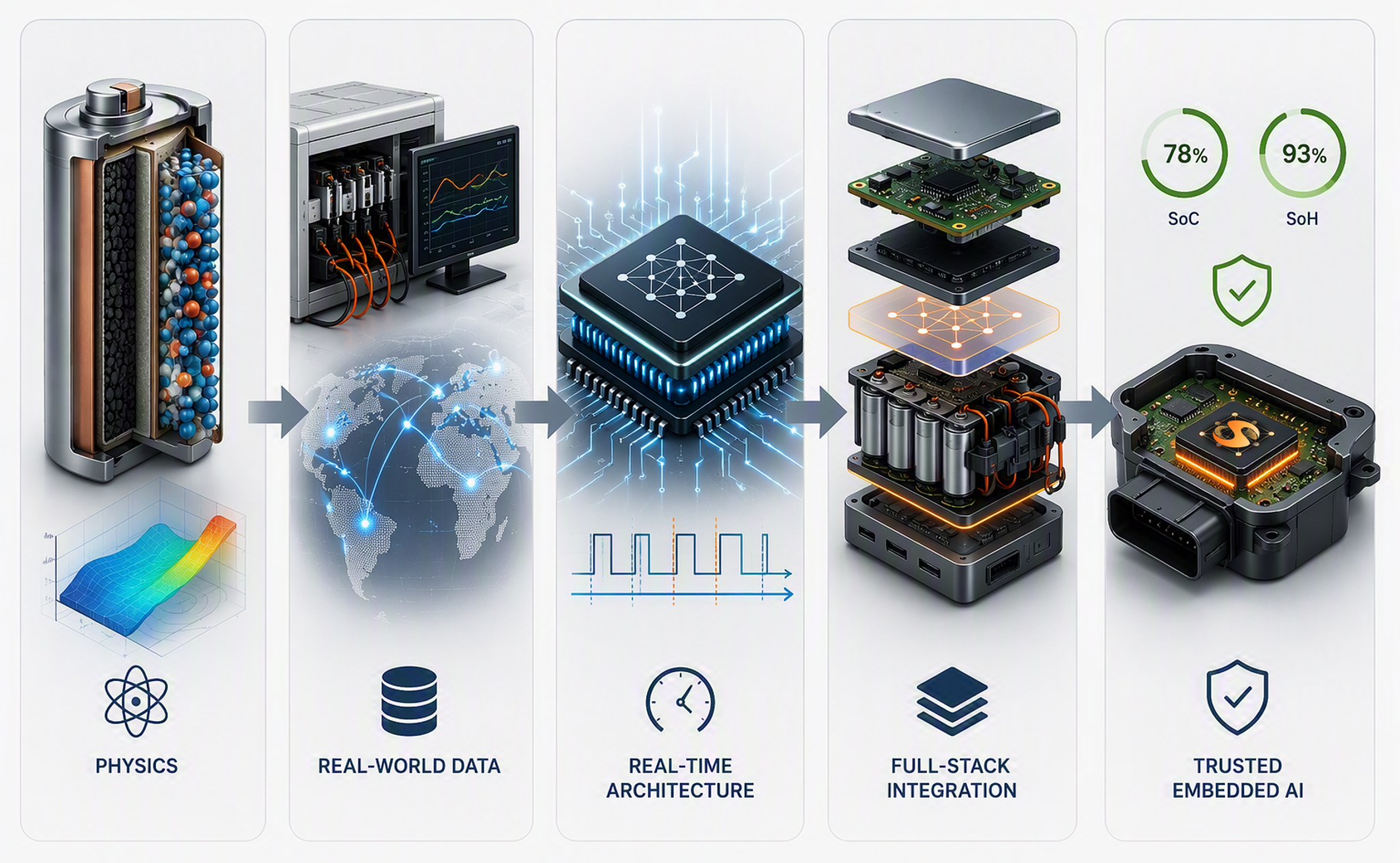
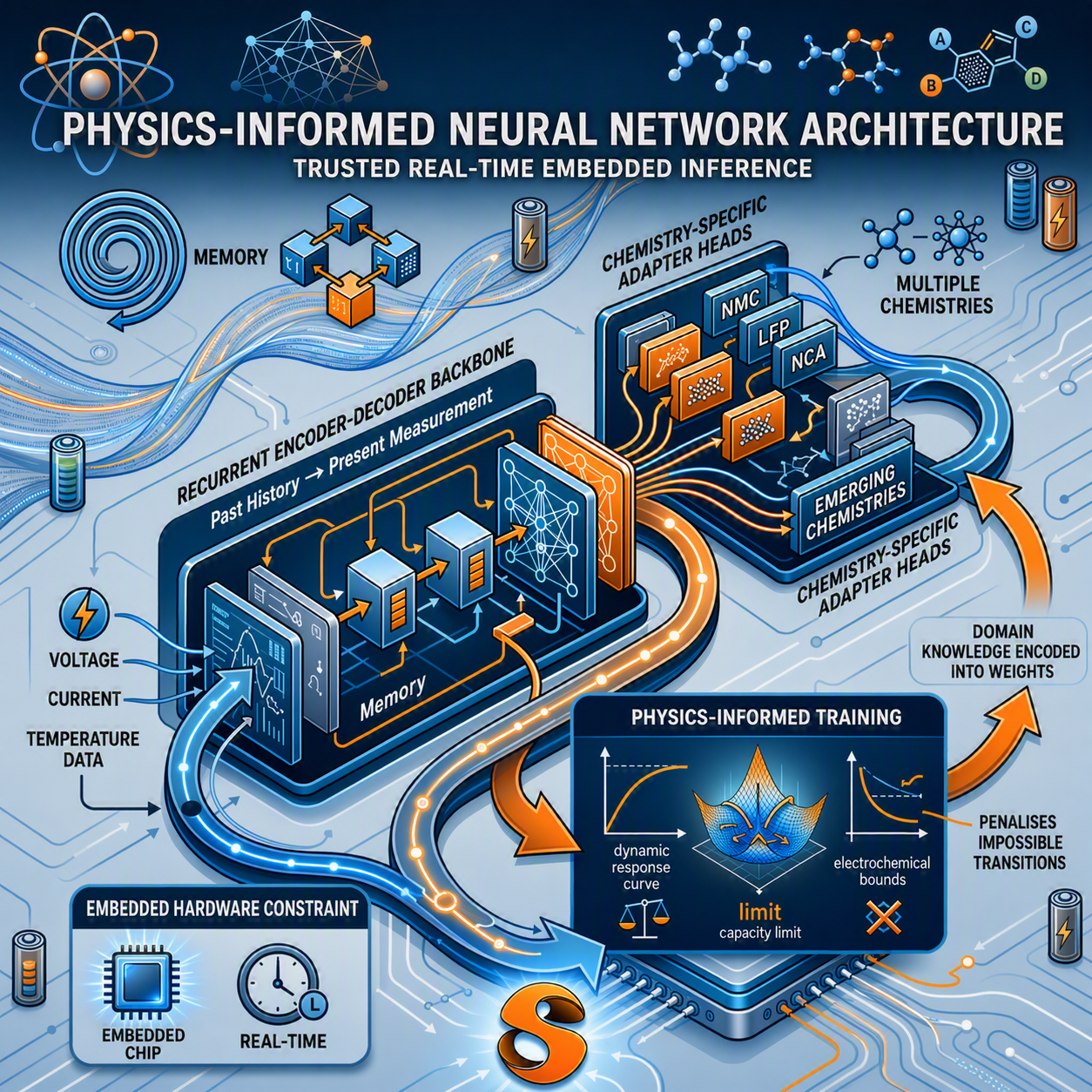
We built AI models specifically for this constraint profile: physics-informed, recurrent, and designed for real-time execution on embedded hardware. These models are trained on large-scale lab and field data, and deployed today in automotive and energy systems.
Why this distinction will matter more, not less
The electrified world is moving toward a new architectural paradigm. In automotive, the shift to zonal architectures is already underway: vehicles redesigned around intelligent local nodes that own real-time control and safety response, coordinated by a central compute domain. The same pattern is emerging in grid storage, industrial robotics, and autonomous systems. Distributed intelligence at the node level is not a future direction. It is happening now.
Every one of those nodes will need AI. The question every system designer will face is whether that AI was built for the environment it operates in, or whether it was adapted to it.
“Edge AI is a deployment choice. Embedded AI is an engineering requirement.”
For systems where failure has physical consequences, the second question is the one that determines whether the deployment actually works. Whether the grid stays online. Whether the vehicle behaves safely. Whether the autonomous system completes its mission.
The industry prides itself on precision. This is one place it is missing it.